Why Paris Moved Its Legendary Bastille Day Fireworks to July 13 in 2026
Paris Moved Its Iconic Bastille Day Fireworks — Here’s Why
On the evening of July 13, 2026, thousands gathered at the Champ de Mars in Paris for a sight that felt familiar yet different. The Eiffel Tower sparkled, the Concert de Paris echoed through the summer air, and at 11 p.m., the sky exploded in a carefully choreographed symphony of color and light. But this year, something was off by exactly 24 hours.
For the first time in its modern history, the City of Paris moved its official Bastille Day fireworks display — one of the world’s most-watched pyrotechnic events — from July 14 to July 13. The reason? The 10th anniversary of the 2016 Nice attack, in which a truck plowed through a Bastille Day crowd on the Promenade des Anglais, killing 86 people and injuring hundreds.
A Day for Remembrance, A Night for Celebration
In coordination with President Emmanuel Macron, Paris Mayor Emmanuel Grégoire announced the schedule change earlier this month, explaining that July 14 would now be dedicated entirely to commemorations and tributes rather than fireworks and festivities.
“We wanted July 14 to be a day of national reflection, dignity, and respect for the victims and their families,” Grégoire said. “The festive celebrations — including the Concert de Paris and the Eiffel Tower fireworks — have been moved to July 13 so that both remembrance and celebration can have the full space they deserve.”
The decision drew widespread support from victims’ families and survivor associations. In Nice itself, large-scale public festivities were also scaled back, while a solemn official ceremony took place on the Promenade des Anglais.
The Show Went On — Earlier Than Usual
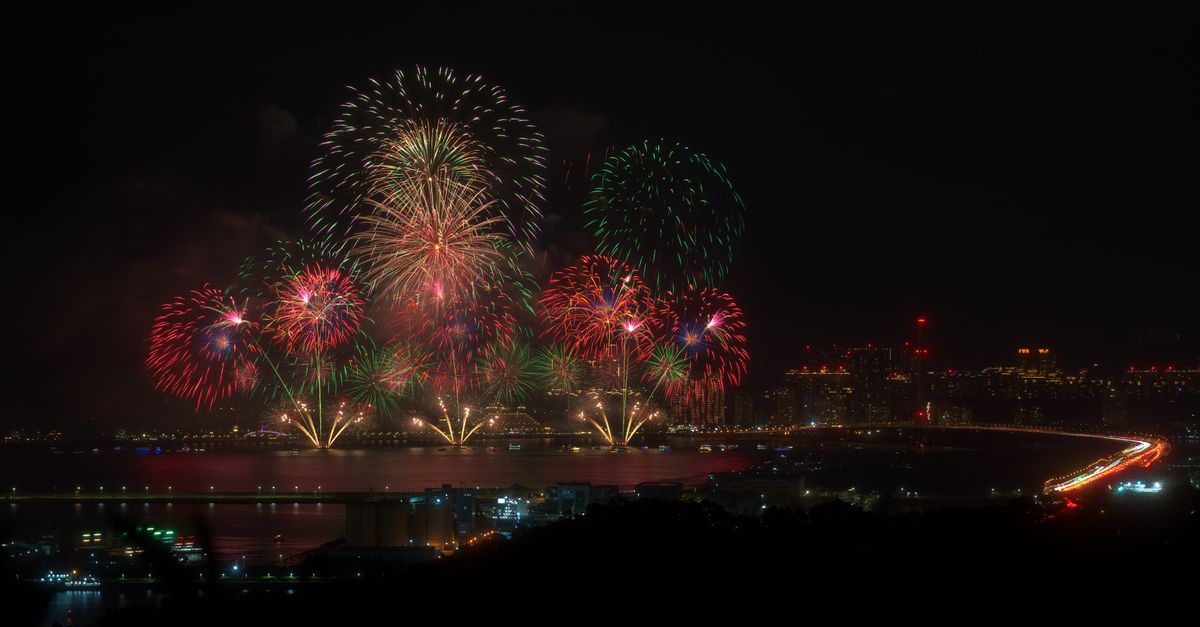
Despite the date shift, the fireworks display itself was anything but diminished. Produced by the City of Paris in partnership with the Eiffel Tower operating company SETE, the 35-minute show used approximately 15,000 individual shells and effects, synchronized to a soundtrack blending classical French compositions with modern tributes.
The theme of this year’s display — “Unité et Lumière” (Unity and Light) — carried symbolic weight, with golden and white sequences representing peace and remembrance before a vibrant finale of multicolored bursts.
The Concert de Paris, typically held on July 14 at the Champ de Mars, also moved to the 13th, featuring performances by the Orchestre National de France and a special tribute to the victims of the 2016 attack.
What This Means for the Fireworks Industry
Paris’s decision to shift one of the world’s most prominent fireworks events is a reminder of the delicate relationship between pyrotechnics and public sentiment. For fireworks manufacturers and display companies — including China-based exporters who supply much of Europe’s professional-grade fireworks — the change was logistical rather than existential.
“Fireworks are ultimately about bringing people together in shared wonder,” said a spokesperson for Skysong Fireworks, a Liuyang-based manufacturer with over 1,000 CE-certified products that supplies professional displays worldwide. “When a community chooses to celebrate on a different day or in a different way, our role is to support that choice with the same quality and safety standards.”
The move also highlights a broader trend in the European fireworks market: increased sensitivity around when and where pyrotechnic displays are held, particularly in cities with recent histories of terrorism or civil unrest.
Bastille Day and Fireworks in France
Bastille Day is France’s most important national holiday, commemorating the storming of the Bastille prison on July 14, 1789. The Eiffel Tower fireworks display has been a centerpiece of the celebration since the tower’s construction in 1889, drawing millions of spectators both in person and via national television broadcasts.
The 2026 edition also coincided with a World Cup semifinal between France and Spain on July 14 — the same day as the military parade on the Champs-Élysées — adding further logistical complexity to the already-packed national holiday.
Looking Ahead
It remains to be seen whether the schedule change will become a permanent fixture. While 2026 marks a special milestone — the 10-year anniversary — some city officials have suggested that similar adjustments could be made for future Bastille Day celebrations falling on significant anniversaries.
For fireworks enthusiasts planning future trips to Paris, the lesson is simple: check the date, because Bastille Day fireworks may not always be on Bastille Day.
Related reading on Fireworks.org:
- America 250: July 4th Fireworks Light Up the Nation — Coverage of how the U.S. celebrated its 250th birthday
- Global Fireworks Regulations Guide — A comprehensive look at safety standards worldwide
- The Spectacular Rise of Chinese Fireworks — From ancient festivals to modern celebrations
- Types of Fireworks: Complete Beginner's Guide — Everything you need to know about consumer and professional fireworks
- Join the discussion: News & Community Forum