
Global Fireworks Culture: How the World Celebrates with Light and Thunder
Fireworks are one of the few inventions that every corner of the planet celebrates with. From the lantern-lined streets of a Chinese New Year festival to a mangrove-fringed harbor in Central America, the same burst of light and thunder means something slightly different in every country. Understanding global fireworks culture isn’t just trivia — it’s the key to appreciating why certain shells, colors, and rhythms show up again and again in so many different languages.
What Is Global Fireworks Culture?
At its simplest, global fireworks culture describes the shared and local ways people around the world use pyrotechnics to mark celebration, remembrance, competition, and even worship. The technology is universal — gunpowder, a lift charge, a bursting shell, and a carefully timed fuse — but the meaning is not. One community might launch fireworks to frighten away evil spirits, another to welcome a new year, and a third to crown the winner of a multi-day competitive festival.
What ties it all together is that fireworks have never belonged to a single nation. The moment they left their birthplace in China and traveled along the Silk Road, they began adapting to the calendars, religions, and aesthetics of every culture that adopted them. That’s why a single article can span five continents and still feel coherent: underneath the local differences runs a shared human impulse to paint the sky with light at the moments that matter most. It’s also why fireworks continue to rank among the most searched topics every summer and at year’s end — people are endlessly curious about how the world celebrates with light.
In the sections that follow, we’ll travel across Asia, Europe, the Americas, and beyond to see how different cultures have made this shared technology their own — and why the same underlying craft and science power every celebration from a village festival to a world-class harbor show.
Asia: The Birthplace of the Fireworks Tradition
If you want to understand the roots of global fireworks culture, you start in China, where it all began with the accidental discovery of gunpowder more than a thousand years ago. The earliest “fireworks” were bamboo stalks thrown into fires, which popped as trapped air expanded — a sound meant to scare off evil spirits. Once gunpowder arrived, the bamboo was replaced with paper tubes, and the modern firecracker was born. To this day, Lunar New Year celebrations across China, Singapore, Vietnam, and diaspora communities worldwide remain anchored by the belief that loud, bright firecrackers drive away bad luck and summon good fortune. You can trace the full origin story in our guide to the history of fireworks from ancient China.
Japan takes a different, almost meditative approach. The Japanese hanabi (literally “fire flower”) tradition is less about noise and more about the elegance of a single, perfectly round burst blooming in silence. Summer hanabi taikai — fireworks festivals — draw millions of spectators, and Japanese shell-makers are globally admired for the precision of their spherical shells and their signature chrysanthemum and peony patterns. India, by contrast, centers fireworks on Diwali, the festival of lights, where the night sky over nearly every city fills with a dense, joyful cacophony of rockets, sparklers, and ground spinners.
Europe: From Royal Courts to Championship Competitions
Europe transformed fireworks from folk ritual into high art. When Italian and German pyrotechnicians brought their craft to the royal courts of France and England in the Renaissance, fireworks became elaborate theatrical productions set to music, often staged over water for dramatic reflection. This courtly tradition never fully died — it evolved into something more democratic and, arguably, more spectacular.
Today, Europe is home to the world’s most prestigious competitive fireworks events. The L’International des Feux Loto-Québec in Montreal and the Pyronale in Berlin draw national teams who compete over multiple nights, each performance synchronized to a soundtrack and judged on choreography, originality, and technical artistry. France’s Bastille Day fireworks over the Eiffel Tower remain one of the most instantly recognizable single images of global fireworks culture. Our report on why Paris moved its Bastille Day fireworks to July 13 in 2026 captures just how deeply these traditions run.
Germany, Spain, Italy, and the United Kingdom each layer regional flavor on top of the shared European template. Spain’s Fallas of Valencia and its mascletà — a daytime barrage focused on rhythm and thunder rather than color — is a reminder that fireworks culture isn’t only a nighttime affair. Italy, the historical epicenter of Renaissance pyrotechnic innovation, still prizes artisanal shell-making and hosts some of the most technically rigorous competitions in the world. The United Kingdom channels its tradition into spectacular Guy Fawkes Night displays every November, while waterfront cities like Edinburgh and London draw from the same royal-court DNA that has defined European fireworks for five centuries.
North America: Bigger, Louder, and Built for Independence
In the United States and Canada, fireworks are inseparable from independence and national pride. The Fourth of July — and, increasingly, Canada Day on July 1 — has turned consumer fireworks into a mainstream summer ritual. In 2026, the run-up to America’s 250th birthday sent demand and enthusiasm to historic highs, as we covered in our recap of the America 250 celebrations that lit up the nation.
North American fireworks culture skews toward the bold and the physical: massive multi-break aerial shells, synchronized municipal displays scored to orchestral pop, and a robust consumer market built around 200g and 500g multi-shot cakes for backyard shows. If you’re new to the categories, our guide to the types of fireworks is the clearest starting point.
Latin America: Fireworks as Devotion and Daring
Latin America weaves fireworks directly into religious and civic life in ways that feel both joyful and radically physical. Mexico’s Día de los Muertos and its Independence Day Grito nights pair elaborate sky shows with street-level firecrackers that rattle every plaza in the country. Guatemala’s toritos — fiery bull-shaped wooden frames packed with explosives and worn by brave runners who charge through crowds — are among the most visceral fireworks traditions anywhere on Earth, a blend of spectacle, courage, and community that has no real equivalent in the sanitized displays of North America or Europe.
Colombia’s Alborada in Medellín kicks off December with a dawn-to-dusk pyrotechnic crescendo that draws regional and international visitors alike. In Central American port cities, fireworks mark both patron-saint feast days and Independence Day, often fired from handmade wooden towers called castillos that spin, whistle, and erupt in choreographed stages as they burn. These traditions are a reminder that global fireworks culture isn’t only about passive spectatorship — in much of the world, it’s something you touch, run through, and participate in directly.
The Middle East and Oceania: Grandeur at Global Scale
Across the Middle East, fireworks have become a signature of national holidays and the lavish openings of landmarks and shopping festivals. Dubai’s New Year’s Eve displays are routinely among the largest and most technically ambitious on Earth, choreographing thousands of shells across entire skylines and waterfronts, while national days in Kuwait, Qatar, and Saudi Arabia treat pyrotechnics as a statement of modern prosperity as much as celebration. The sheer scale — and the willingness to spend on synchronized, city-spanning displays — has made the region a proving ground for the industry’s most advanced launch and timing technology.
In Oceania, Australia’s Sydney Harbour New Year’s spectacle has become a globally televised benchmark, timed to welcome the new year before almost any other major city. New Zealand blends its British fireworks heritage with its own summer celebrations, most notably around Matariki and Guy Fawkes Night. What unites these far-flung regions with everywhere else is the same impulse: communities choose fireworks to make a single night feel like the most important night of the year, no matter what calendar or faith they mark it by.
The Shared Science and Craft Behind Every Culture
Strip away the local costumes and ceremonies, and every one of these traditions rests on the same body of pyrotechnic knowledge. The brilliant reds, greens, blues, and golds that define a festival in Japan or a harbor show in Dubai all trace back to the same metallic salts and binding chemistry — a subject we unpack in our explainer on the science behind fireworks colors. Likewise, the shells themselves, whether hand-rolled in Liuyang or manufactured under strict quality controls for the Western consumer market, follow a shared manufacturing process refined over centuries.
That craftsmanship matters more than ever as global supply chains connect local celebrations to factories half a world away. A growing share of the world’s fireworks — from the shells that crown Canada Day to the cakes filling American backyards every July — originate in Liuyang, China, a region synonymous with pyrotechnics for more than a thousand years. Companies like Skysong Fireworks, a Liuyang-based manufacturer operating since 2005 with both CE and DOT certifications, exemplify how traditional craft now meets modern safety and quality standards for an international market. Wherever the next firework bursts, chances are it carries a small piece of that shared global heritage with it.
Why Global Fireworks Culture Keeps Growing
Far from fading, fireworks culture is expanding. Competitive festivals are multiplying across Europe and Southeast Asia. Drone shows are appearing alongside — and sometimes in dialogue with — traditional pyrotechnics rather than replacing them. And as more countries formalize their consumer fireworks markets, the vocabulary of shells, cakes, and effects keeps spreading to new audiences.
Whether you’re a spectator chasing the next great festival, a hobbyist building a backyard show, or a retailer sourcing from manufacturers around the world, understanding global fireworks culture deepens every display you watch. The next time you stand under a dark sky and watch the first shell open overhead, you’ll be seeing more than a flash of color — you’ll be seeing a thousand years of shared human celebration.



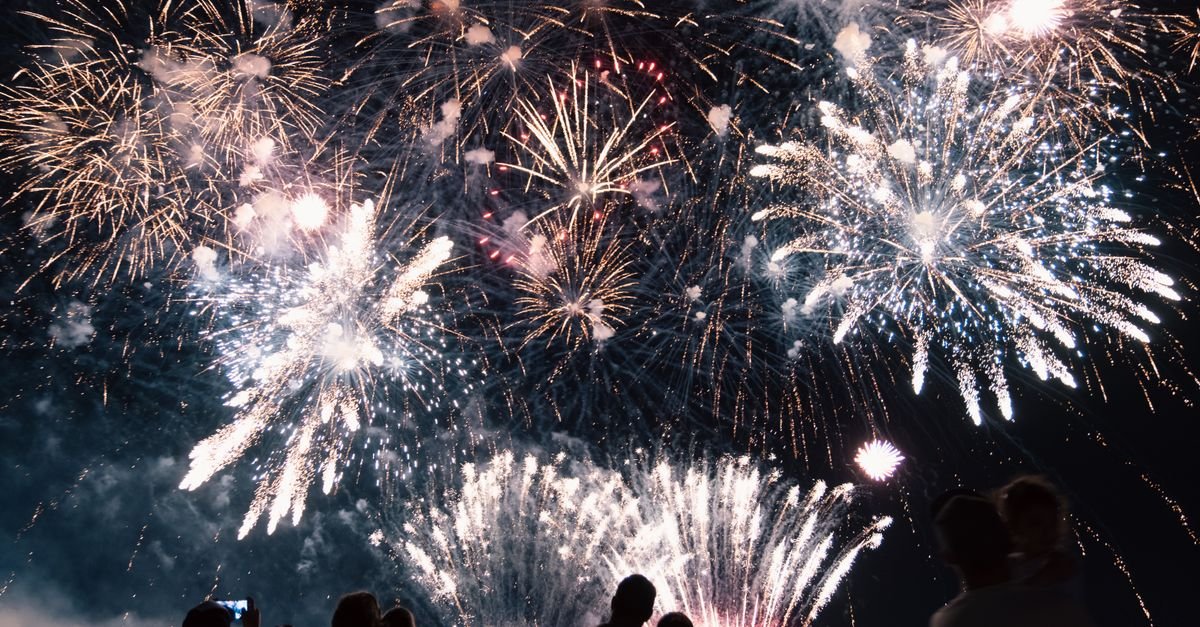
[…] globe. History and culture channels explore that lineage, from early firecrackers to the elaborate fireworks festivals held around the world every […]